
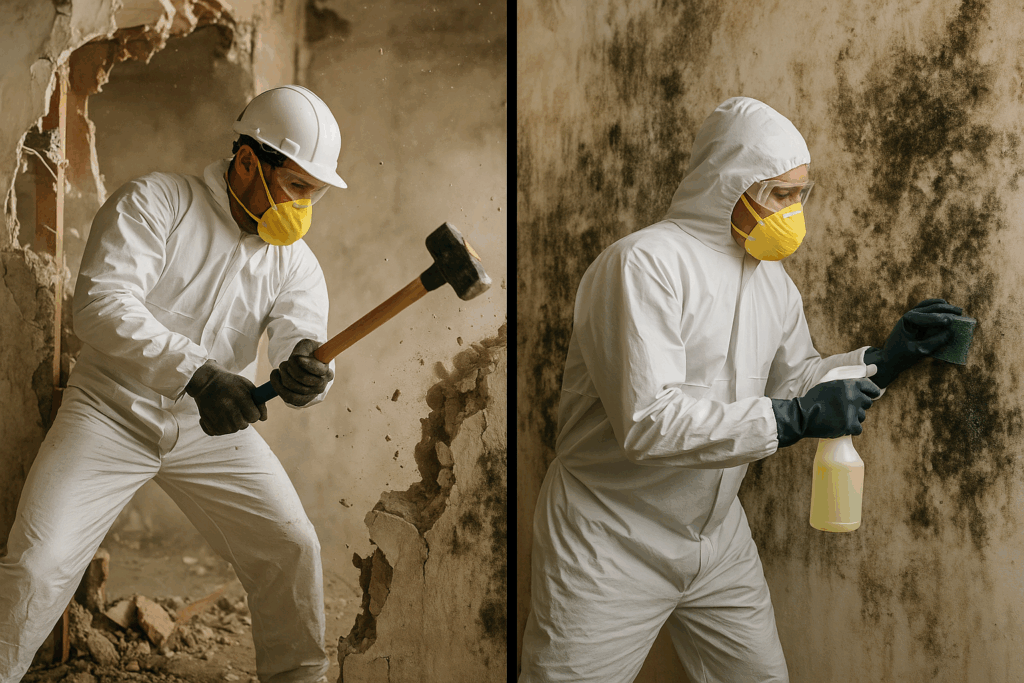
When mold invades your home, it’s more than just an eyesore with a musty smell—it can weaken your home’s structure and pose health risks. Once you realize mold has taken hold, you have two primary options: demolish the affected areas or engage in professional mold remediation.
While demolition might seem like a quick fix (simply rip out damaged materials and call it a day) mold remediation is the more thorough way to ensure your property remains safe and healthy in the long run. Below, we’ll compare these two methods and explain why investing in professional remediation can save you time, money, and headaches down the road.
What is Mold Remediation?
Mold remediation goes beyond just wiping away visible mold. It’s a comprehensive process designed to:
- Identify the Source – A thorough inspection uncovers how and why mold started growing (e.g., leaks, poor ventilation).
- Contain the Spread – Specialists isolate affected areas and use air filtration to capture airborne spores.
- Remove Mold Safely – Contaminated materials may be removed if they can’t be effectively cleaned; otherwise, surfaces are professionally treated and sanitized.
- Address Underlying Issues – Technicians fix the root cause, whether it’s a leak or persistent moisture.
- Restore and Prevent – The final step involves repairs, sealing vulnerable areas, and ensuring the mold won’t return.
Though mold remediation generally costs more upfront, ranging from a few thousand to tens of thousands of dollars depending on the extent, it tackles both visible mold and the unseen factors causing it. By thoroughly treating and preventing future outbreaks, you protect both your home’s structural integrity and your family’s well-being.
What is Demolition?
Demolition in a mold context often means tearing out and discarding mold-infested materials (drywall, insulation, flooring) without necessarily focusing on the root causes of mold growth. It typically involves:
- Assessment – Checking the extent of the mold damage.
- Removal – Stripping damaged materials, sometimes down to the bare studs.
- Disposal – Safely disposing of contaminated items.
- Reconstruction – Installing new materials to replace what was removed.
Demolition can be cheaper initially if the scope is limited—for instance, removing one heavily contaminated wall. However, if the underlying moisture issue remains, mold can simply return, leading to more tear-outs, health concerns, and unexpected future expenses.
Cost Comparison: Remediation vs. Demolition
No matter which route you choose—remediation or demolition—delaying mold removal will almost always lead to higher costs. Mold spreads quickly, causing more damage to materials and potentially creating health risks that require even more extensive repairs. Acting promptly can save you thousands in additional expenses and prevent further complications down the road.
Mold Remediation Costs
The cost of mold remediation typically ranges from $500 to $6,000, depending on:
- The size of the affected area.
- The type of mold.
- The extent of damage.
For instance, a small patch of mold on a bathroom ceiling may cost only a few hundred dollars, while widespread mold in a basement could cost thousands.
Demolition and Reconstruction Costs
Demolition is more extensive and often pricier. Costs can range from $2,000 to $30,000 or more, depending on:
- The materials being removed.
- The size and complexity of the area.
- Reconstruction costs, which add significantly to the budget.
For example, replacing mold-damaged drywall in a single room may cost a few thousand dollars, but tearing out and rebuilding a kitchen or basement can quickly escalate into tens of thousands.
Why Mold Remediation Often Wins Out
- Complete Eradication – Remediation addresses visible mold and unseen spores, reducing the likelihood of recurrence.
- Structural Integrity – Thoroughly cleaning and preserving existing materials (when possible) keeps your home’s core structure intact.
- Health and Safety – Proper mold removal reduces allergens and toxins, creating a safer environment for your family.
- Preventive Measures – By fixing leaks, drainage issues, and ventilation problems, remediation guards your home against future mold growth.
When Might Demolition Be Appropriate?
While remediation is the gold standard for most mold problems, demolition can be a viable option when:
- Materials Are Irreparable: If mold has compromised structural elements or if porous materials (e.g., insulation) are saturated beyond salvage.
- Severe Contamination: In rare cases where mold is widespread and has caused irreversible damage, a complete tear-out may be the only path forward—but even then, a remediation plan should follow to address moisture issues and ensure mold doesn’t return.
Keep in mind that demolition without remediation measures often results in mold returning. For the best outcome, demolition should go hand-in-hand with targeted mold treatments and thorough moisture control.
Invest in Prevention for Lasting Peace of Mind
No matter which approach you end up taking, prevention is key to avoiding future mold problems. Regular inspections, proper ventilation, and prompt attention to water damage can dramatically reduce the risk of a serious mold infestation. By working with a professional who specializes in both water damage restoration and mold prevention, you ensure any moisture issue is addressed before it spirals into a costly mold fiasco.
Partner with a Trusted Mold Expert
At All About Restoration, we prioritize long-term solutions that protect your home’s structural integrity and your family’s health. While demolition may appear to solve mold issues in the short term, a comprehensive remediation plan is often the wiser investment—ensuring mold is effectively removed at its source and prevented from recurring.
If you suspect mold or want to safeguard your home, contact us today. Let’s discuss the right course of action for your situation, and work together to keep your home safe, clean, and mold-free for years to come.